Music 2026
“I was chosen to sing and I enjoyed doing it because I like … stood up to sing and I could just express myself.
“I think that music is fun because it helps you with rhythms and sequences”.
“Music is fun because we sing lots of different songs like Supercalifragilistic. We have learnt a new Christmas song”.
” Mr Laverick teaches us about ukulele and rhythm”.
At Bearpark Primary School and Nursery, we make music lessons to be fun and inspiring, engaging the children with varied pieces of music, songs, lyrics and movement. We allow our children to feel able, reflective and expressive, developing their own appreciation of music with the opportunities we provide as a school.
Bearpark children:
- perform, listen to, review and evaluate music across a range of historical periods, genres, styles and traditions, including the works of the great composers and musicians
- learn to sing and use their voices
- have the opportunity to learn to play a musical instrument
- use technology appropriately to create and compose music on their own and with others
- understand and explore how music is created
All children are actively encouraged and given the opportunity to learn to play a musical instrument. Musical opportunities in school include weekly class music lessons, whole class ukulele lessons, singing practice, visiting musicians, school links to local musicians and festival organisers, Christmas performances and other opportunities when they present themselves. The school also has a popular ukulele club and singing group. We intend to develop a curiosity for the subject, as well as an understanding and acceptance of the validity and importance of all types of music. We are committed to ensuring children understand the value and importance of music in the wider community, and are able to use their musical skills, knowledge, and experiences to involve themselves in music, in a variety of different contexts.
The National Curriculum says:
Subject content – Key stage 1
Pupils should be taught to:
1.1 use their voices expressively and creatively by singing songs and speaking chants and rhymes
1.2 play tuned and untuned instruments musically
1.3 listen with concentration and understanding to a range of high-quality live and recorded music
1.4 experiment with, create, select and combine sounds using the inter-related dimensions of music.
Subject content – Key stage 2
Pupils should be taught to:
2.1 play and perform in solo and ensemble contexts, using their voices and playing musical
instruments with increasing accuracy, fluency, control and expression
2.2 improvise and compose music for a range of purposes using the inter-related dimensions of
music
2.3 listen with attention to detail and recall sounds with increasing aural memory
2.4 use and understand staff and other musical notations
2.5 appreciate and understand a wide range of high-quality live and recorded music drawn from
different traditions and from great composers and musicians
2.6 develop an understanding of the history of music.
2026
We now have good music provision in our school. Pupils access singing and dedicated music lessons.
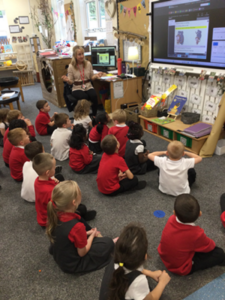
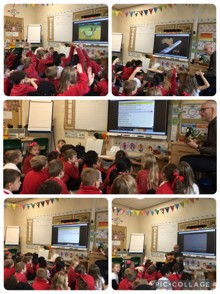
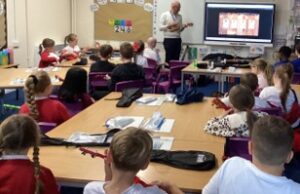
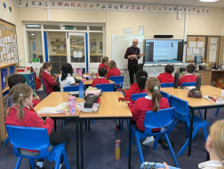
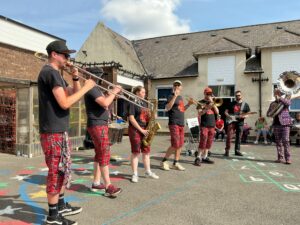
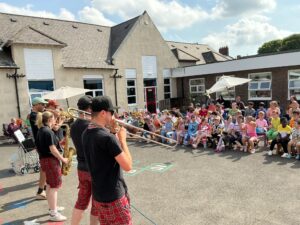
Mr Laverick from Durham Music Service is currently teaching ukulele to pupils in Years 5 and 6. In Class 2, pupils have been learning a variety of songs, including pieces linked to the Great Fire of London and the Dominican Republic, supporting cross-curricular links with history and geography. Lessons have also included the use of percussion instruments, allowing pupils to develop their understanding of rhythm, ensemble performance and musical skills.
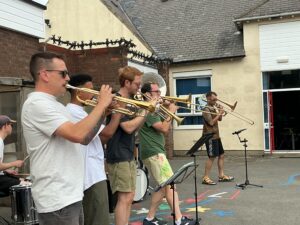
Amy Ward, a peripatetic music teacher, supports the school with music for seasonal performances and community events. Mr Laverick also supports music for seasonal performances and community events.
Music Progression Map
Primary Curriculum and Progress Map for 2025-2026
Durham Music Service have worked with all of our classes this year.
Music Overview
Our Curriculum:
We have designed our curriculum so that all pupils are able to build on prior knowledge and skills. We use a range of supporting materials and sources, including purchasing Charanga, for staff to use in their lessons.
Music in Early Years
In Nursery:
 Nursery love Koo Koo Kangaroo!
| Listen with increased attention to sounds.Respond to what they have heard, expressing their thoughts and feelings.Remember and sing entire songs.Sing the pitch of a tone sung by another person (‘pitch match’).Sing the melodic shape (moving melody, such as up and down, down and up) of familiar songs.Create their own songs, or improvise a song around one they know. |
Play instruments with increasing control to express their feelings and ideas.Increasingly be able to use and remember sequences and patterns of movements which are related to music and rhythm.Sing a large repertoire of songs.Know many rhymes, be able to talk about familiar books, and be able to tell a long story.
In Reception:
 Class 1 love Disney songs.
| Listen attentively, move to and talk about music, expressing their feelings and responses.Sing in a group or on their own, increasingly matching the pitch and following the melody.Explore and engage in music making and dance, performing solo or in groups. |
| Listen carefully to rhymes and songs, paying attention to how they sound.Learn rhymes, poems and songs. |
| The Early Learning Goal:Being Imaginative and ExpressiveSing a range of well-known nursery rhymes and songs.Perform songs, rhymes, poems and stories with others, and – when appropriate try to move in time with music. |
The table below, outlines the skills and knowledge intended for each year group.
| Yr 1 | Yr 2 | Yr 3 | Yr 4 | Yr 5 | Yr 6 | |
| Skill Perform | Clap, sing or chant in time with existing musicPlay an untuned instrument in time | Perform rhythms and basic tunes in a group in timePlay a tuned instrument with others | Perform solo and as an ensemble with some errors of time or pitch | Perform solo and as an ensemble with few errors of time or pitch | Perform solo and as an ensemble, demonstrating better grasp of dynamics | Performs sole and as an ensemble with sensitivity and dynamic range, with very few errorsPlay more notes and chords on their instrument and perform more complicated music. |
| Skill Listen((Active Listening) | Listen to, Respond and concentrate on, a range of musical styles( clapping back rhythms) | Start to compare styles, instrumentation and volume | Listen for and describe specific instrumentation of a piece | Listen for and describe instrumentation with an understanding of EFFECTPlaying/singing a melody that they have heard on an instrument | Recall the use of sounds from a range of pieces and compare their EFFECT in those piecesUse elements when creating own pieces | Accurately describe timbre, pitch, melody, major and minor key, instrumentation and tempo EFFECTS |
| Skill Compose | Create rhythms, both solo and ensemble | Create, blend or use existing sounds or a tuned instrument to create melody and harmony | Improvise music around a chosen genre or theme | Improvise music around a given genre or theme – to a given audience (EFFECT) | Compose and prepare a group to perform a composition to a given audience (EFFECT) | Compose, using standard music notation, to prepare a solo or ensemble performance of your piece |
| Skill Appreciate | Evaluate music beyond personal preferences(strong SMSC link). Likes, dislikes, compare and contrast effects of music | Listen to, and critically evaluate, pieces of music from an increasingly broad range of artists, nations, cultures and genresCompare, contrast and discuss cultural significance and historical impactDevelop (throughout these four years) an on-going timeline of global music in a historical climate | ||||
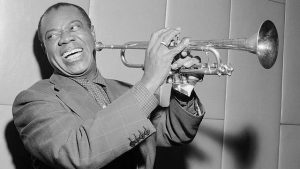
Class 2 musician is Louie Armstrong.
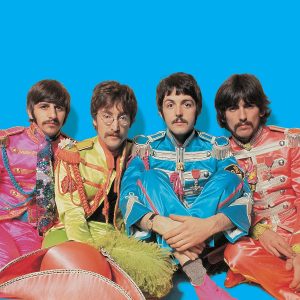
Class 3 learn about The Beatles.
Class 4 learn about Edward Elgar.
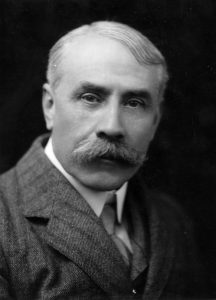
Sir Edward William Elgar (1857 – 1934), the English composer. (Photo by E O Hoppe/Getty Images)